







This one starts in Dhamtari—a small city in Chhattisgarh you might not find on a tourist map. But inside Shiv Singh Verma Aadarsh Government Higher Secondary School , something big has been brewing for a while now .
It’s not a new building or a fancy sports ground. It’s a room full of soldering irons, 3D printers, half-finished robots, and kids who refuse to believe that “small town” means “small dreams.”

That room is called the Atal Tinkering Lab.
More Than Just a Lab
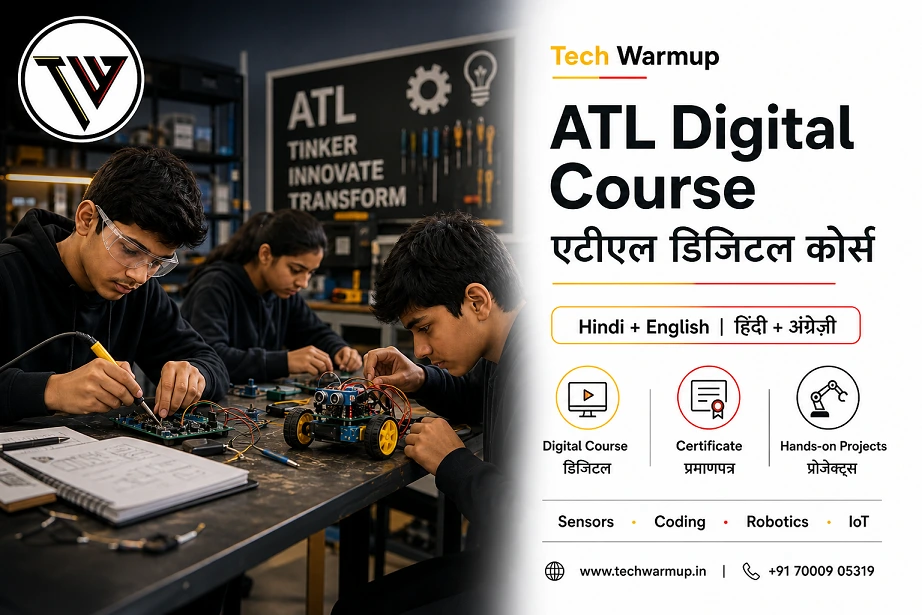
If you walk in on a regular afternoon, you’ll see students huddled over circuit boards. Someone’s coding on a laptop. Someone else is sketching a prototype for a problem only they noticed—like how to alert villagers about stray cattle on dark roads, or how to make a low-cost moisture sensor for farmers.
These kids aren’t waiting for college to start “learning.” They’re already doing it.
The lab runs under the Atal Innovation Mission (NITI Aayog) , so it’s not just about making cool gadgets. It’s about looking at real problems in their own neighborhoods and saying, “What if we fixed this?”

And honestly? That’s the kind of education that sticks.
From Classroom Projects to National Recognition
Over the last couple of years, these students have quietly (and sometimes not-so-quietly) been winning awards at state and national competitions. Not because they have fancy resources—but because they have curiosity and zero fear of failing.
One student told me recently:
“We just wanted to build something that helps people. The lab let us try, fail, and try again.”
That’s the thing about tinkering. It’s not about getting it right the first time. It’s about the 20th time.
Their projects have been appreciated everywhere from local science fairs to national innovation summits. But the moment that made everyone in Dhamtari sit up and take notice?
They were invited as special guests for the Republic Day parade in New Delhi.
Let that sink in. Kids from a government school in Dhamtari, standing in Delhi on Republic Day, representing not just their school but an entire state’s hope.
The Delhi Moment
When they got the news, you could feel the excitement through the walls. Teachers were emotional. Parents, speechless. And the students? They were already planning what to ask when they met other innovators in Delhi.

“We are excited and proud to represent our school and Chhattisgarh. This only makes us want to work harder and dream bigger,” one of them said.
That’s the line that stayed with me. Not “we’ve made it.” But “we’re just getting started .”
Being invited to witness the Republic Day parade isn’t a participation certificate. It’s a signal from the country that says: We see you. Keep going.

None of This Happens Alone
Behind every 3D-printed prototype is a mentor who stayed back after school. Behind every winning project is someone who believed in the kids before they believed in themselves.
So yes, big thanks to the Atal Innovation Mission for creating these labs in the first place. Without that vision, this room would still be another regular classroom.
But special mention has to go to TechB Bhilai—our technical helping partner. They didn’t just visit once and leave. They came regularly. Ran training sessions. Answered dumb questions without making anyone feel dumb. Showed up when the students needed expert eyes on a tricky code or a broken motor.

That kind of hand-holding changes everything.
What This Story Really Means
Look, not every student from this lab will become an engineer or a startup founder. That’s fine.
But every single one of them is leaving school with something more valuable:
The confidence that they can identify a problem, build a solution, and stand in front of a room (or a national stage) and say, “I made this.”
From a tinkering lab in Dhamtari to the Republic Day parade in Delhi—these kids have already traveled further than most people dare to dream.
And the best part?
They’re not done yet.
Proud to share this journey. And even prouder to know that the next big innovation might just come from a government school in a small town, from a kid who refused to stay quiet.
Comments